
Meet Our Faculty
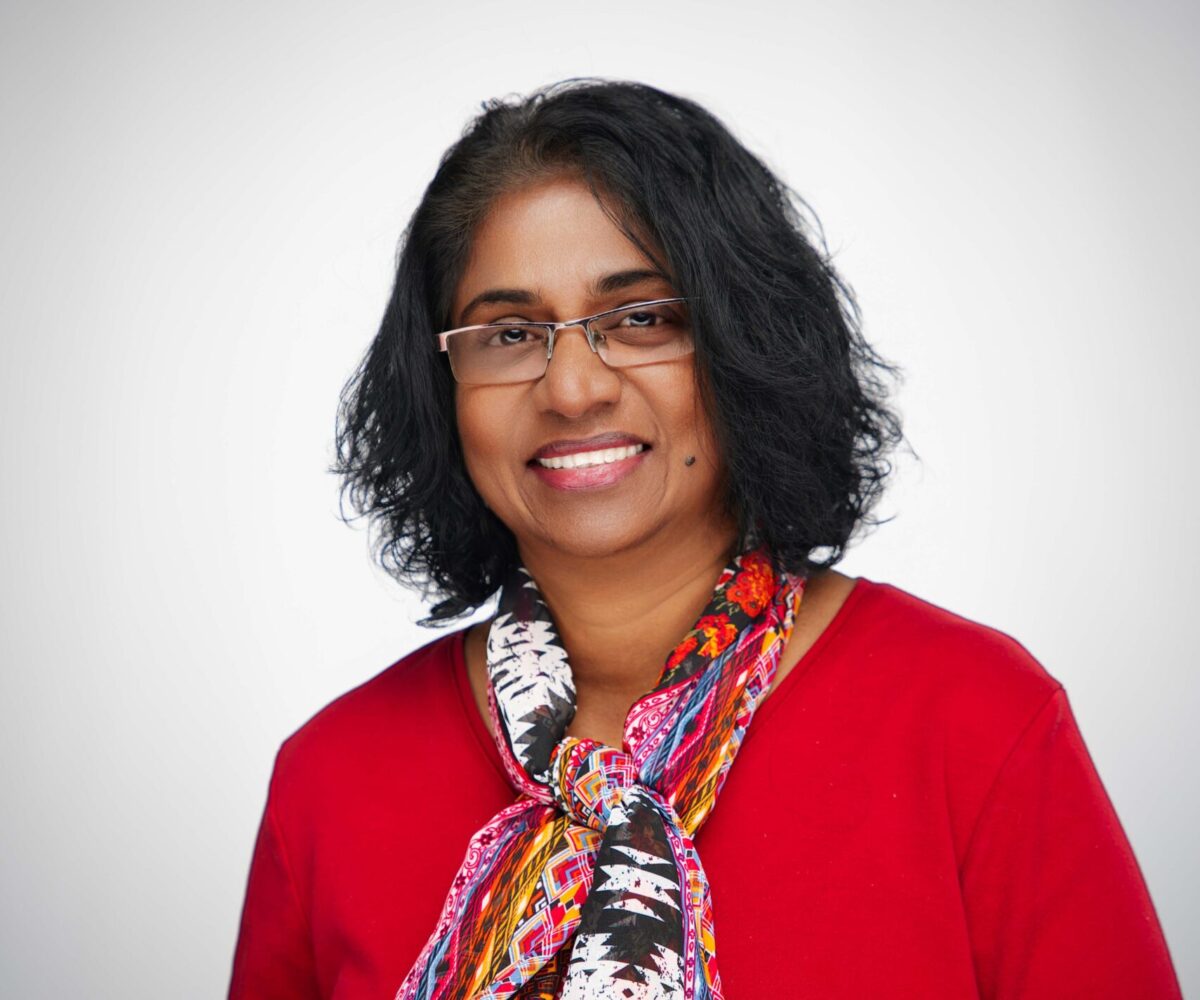
GANGA FERNANDO, Ph.D.
PROFESSOR OF CHEMISTRY
Iva Corpstein Chair and Department Coordinator
Ph.D., Southern Illinois University Carbondale
B.S., University of Sri Jayewardenepura, Sri Lanka
Attorney At Law – Sri Lanka Law College
Dr. Ganga Fernando is a Professor of Chemistry at Cottey College and an analytical chemist whose career brings together research, teaching, mentorship, and community engagement. Originally from Sri Lanka, Dr. Fernando has built an interdisciplinary career spanning analytical chemistry, mass spectrometry, proteomics, forensic chemistry, environmental analysis, and undergraduate research.
Dr. Fernando earned her B.S. degree in Chemistry with Honors from the University of Sri Jayawardenepura in Sri Lanka and an Attorney at Law degree from Sri Lanka Law College in Colombo. In 2002, she came to the United States to pursue doctoral studies in Analytical Chemistry at the University of Texas at Arlington, which she continues to consider her “U.S. home.”
In 2005, she moved to Southern Illinois University Carbondale to continue her doctoral research under the direction of Dr. Gary Kinsel. She received her Ph.D. in Chemistry in 2009. Her doctoral research focused on developing pulsed-plasma-modified surfaces for on-probe affinity fractionation of complex protein mixtures and their analysis using Matrix-Assisted Laser Desorption/Ionization (MALDI) mass spectrometry.
Dr. Fernando joined Cottey College in 2008. As a teacher-scholar, she is committed to connecting rigorous scientific training with hands-on research and meaningful student experiences. Her teaching and research interests include analytical chemistry, proteomic MALDI mass spectrometry, forensic chemistry, environmental analysis, and undergraduate research.
Additional Information
Dr. Fernando’s research interests have evolved from her doctoral work in proteomics and MALDI mass spectrometry to a broad range of interdisciplinary projects that provide opportunities for undergraduate students to engage directly in scientific research.
Her research interests include:
- Proteomic applications of Matrix-Assisted Laser Desorption/Ionization (MALDI) mass spectrometry
- Forensic applications of mass spectrometry
- Antioxidant properties and chemical composition of local honey varieties
- Cyanotoxin analysis in lakes and drinking-water supplies
- Effects of heavy metals on cyanobacterial growth
- Analytical chemistry and environmental applications of chemical instrumentation
Dr. Fernando is an active member of the American Chemical Society and the American Society for Mass Spectrometry. She has also been involved in regional chemistry leadership and outreach, working to increase awareness of chemistry and STEM opportunities among young people.
Her outreach activities have included National Chemistry Week programs, 4-H and community STEM activities, and Cottey Chemistry Community Outreach (C3O), for which she received a Missouri Campus Compact mini-grant.
At Cottey College, Dr. Fernando has contributed to student life and mentoring through advising and involvement in organizations and activities including the International Friendship Circle and Pickleball Club.
Travel and international education are an important part of Dr. Fernando’s approach to teaching and mentoring. She has traveled extensively in the United States and internationally and has incorporated global experiences into Cottey’s academic programs.
She has led Spring Break educational modules to London and Paris, where students explored scientific and historical sites including the Science Museum of London and the Musée Curie in Paris. In 2018, she co-led a Cottey College service-learning trip to Sri Lanka and India, accompanying students as they explored her home countries through cultural, educational, and community-based experiences. She accompanied the Food as Medicine class with Dr. Manjira Kumar to the Blue Zone island, Sardinia in fall 2026.
Dr. Fernando’s international experiences continue to influence her teaching, research, and commitment to helping students understand science within a broader global context.
- Wadzanai Ndambakuwa a, Yustinah Ndambakuwa a, Jonghyun Choi b, Ganga Fernando a, Dipesh Neupane c, Sanjay R. Mishra c, Felio Perez d, Ram K. Gupta b,* “Nanostructured nickel-cobalt oxide and sulfide for applications in supercapacitors and green energy production using waste water”, Surface & Coatings Technology410 (2021) 126933.
- Kolli, V., Roth, H. A., De La Cruz, G., Fernando, G.S., Dodds, E. D., “The role of proton mobility in determining the energy-resolved vibrational activation/dissociation channels of N-glycopeptide ions”, Analytica Chimica Acta896 (2015) 85-92.
- Rathore, D., Aboufazeli, F., Huang, Y., Kolli, V., Fernando, G. S., Dodds, E. D., “Ion Dissociation Methods in Proteomics”, Encyclopedia of Analytical Chemistry, Online: 10 Sep 2015, DOI: 10.1002/9780470027318.a9310.
- Wong, V.N., Fernando, G., Wagner, A.R., Zhang, J., Kinsel, G.R., Zauscher, S., Dyer, D.J. “Separation of Peptides with Polyionic Nanosponges for MALDI-MS Analysis” Langmuir, 2009, 25 (3), 1459–1465.
- Li, M., Fernando, G., Van Waasbergen, L.G., Cheng, X., Ratner, B.D., Kinsel, G.R. “Thermoresponsive MALDI probe surfaces as a tool for protein on-probe fractionation” Analytical chemistry, 2007, 79, 6840-6844.
One of Dr. Fernando’s current research interests is the scientific investigation of locally produced honey. This work provides Cottey students with an opportunity to apply analytical chemistry techniques to a locally relevant research question while working directly with community producers.
Students investigate the antioxidant capacity of different honey varieties using analytical methods such as the DPPH radical-scavenging assay, Trolox-equivalent measurements, IC50 determination, and FRAP analysis. Additional studies may examine antimicrobial properties and the relationship between honey characteristics, geographic origin, and chemical composition.
The project combines undergraduate research, analytical chemistry, community engagement, and scientific communication. It also reflects Dr. Fernando’s broader philosophy that meaningful research can begin with questions rooted in the communities where students live and learn.
Dr. Ganga Fernando’s interest in global health and disability research grew from her desire to understand the challenges faced by children and families living with disabilities in developing nations, particularly in communities where access to specialized healthcare and rehabilitation services may be limited.
During the summer and fall of 2017, Dr. Fernando spent seven months in her native Sri Lanka conducting field-based research on access to healthcare and rehabilitation services for children with disabilities. Her work was undertaken in collaboration with colleagues specializing in healthcare and rehabilitation and was conducted with institutional permission from Rajarata University and the relevant authorities in Sri Lanka.
The research examined the experiences of children and families across a range of settings, with particular attention to the differences between services available in urban and rural communities. Dr. Fernando sought to better understand not only the availability of medical services, but also the broader social, educational, transportation, and economic challenges that can influence a family’s ability to obtain appropriate care.
Field Research
As part of the project, Dr. Fernando:
- Met with healthcare professionals and specialized providers at healthcare facilities.
- Visited schools and specialized programs serving children with disabilities.
- Observed rehabilitation and support services available to children and their families.
- Conducted home visits with families in rural communities.
- Examined challenges related to access to healthcare and rehabilitation services.
- Connected with professionals and organizations working to improve opportunities for people with disabilities.
The fieldwork provided an opportunity to listen directly to families and healthcare providers and to better understand how healthcare systems function within local cultural, geographic, and economic contexts.
International Collaboration
Dr. Fernando’s research was interdisciplinary and collaborative, bringing together perspectives from chemistry, healthcare, rehabilitation, education, and public health. Her work emphasized the importance of understanding disability not solely as a medical issue, but as a complex challenge involving families, communities, healthcare systems, education, and social support.
Her research activities also connected her with international conversations surrounding public health, disability, rehabilitation, and equitable access to healthcare.
Shortly after arriving in Sri Lanka, Dr. Fernando participated in the 3rd International Conference on Public Health: Strengthening the Public Health Infrastructure Towards Healthy Communities in Kuala Lumpur, Malaysia. Later that year, she attended the 2nd World Conference on Disability and Rehabilitation: Inspiring Possibilities…Enhancing Opportunities for Ability in Colombo, Sri Lanka.
These experiences allowed her to share perspectives with researchers and practitioners from different countries while learning about emerging approaches to disability and rehabilitation.
Bringing Global Research into the Classroom
An important goal of Dr. Fernando’s research is to create meaningful connections between scholarship and student learning. Her experiences in Sri Lanka became part of her broader effort to introduce Cottey students to global health challenges and to demonstrate how research can extend beyond the laboratory.
Through international educational experiences, students have had opportunities to meet collaborators, visit healthcare facilities, and explore the cultural and social contexts surrounding health and disability.
Dr. Fernando believes that international experiences can help students develop a deeper understanding of the relationship between science, healthcare, culture, and social responsibility.
Continuing the Work
The global health and disability research project represents an important part of Dr. Fernando’s broader scholarly interests in interdisciplinary research and community engagement. Her work demonstrates her commitment to using academic research to better understand real-world challenges and to creating educational experiences that encourage students to become thoughtful, globally engaged scientists and citizens.
Research themes:
- Global health
- Disability and rehabilitation
- Healthcare access
- Rural communities
- Children with disabilities
- Public health
- International collaboration
- Service learning